
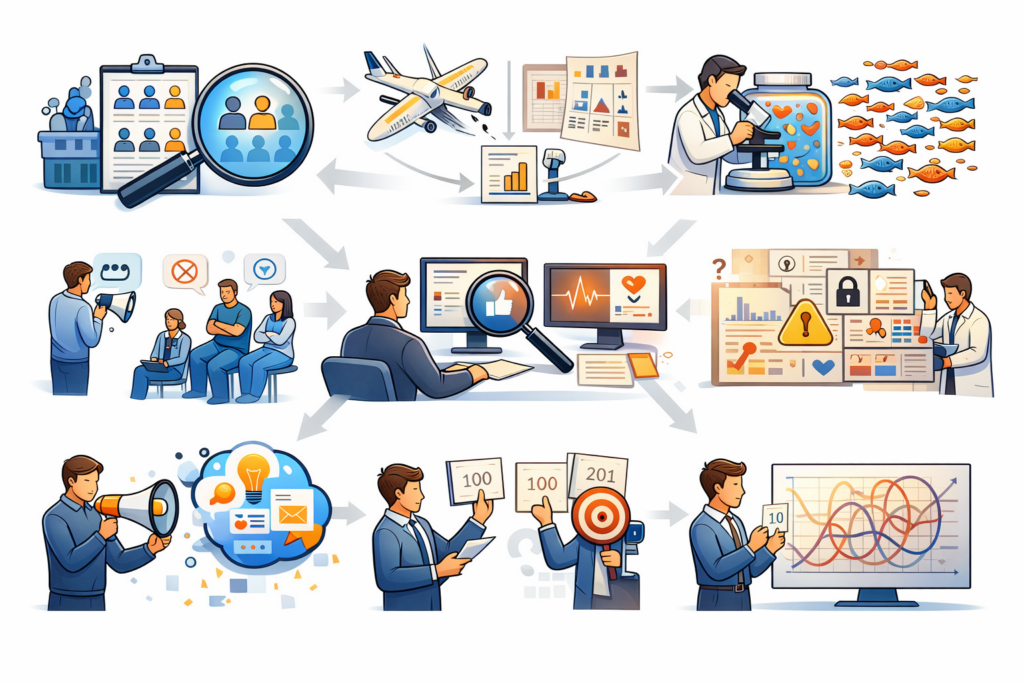
The Ultimate Attribution Error describes a cognitive bias where negative outcomes are attributed to group characteristics, while positive outcomes are attributed to individual exceptions. In other words, failures are blamed on the collective, whereas successes are personalized.
In data and BI contexts, this bias often emerges subtly. Analysts or managers may assume that errors in data quality, missed deadlines, or poor adoption rates are due to the inherent limitations of a team, department, or data source. Conversely, when a particular project or analysis succeeds, credit is given to individual analysts or specific interventions, ignoring systemic factors or collective effort.
This bias can damage decision-making and outcomes. Teams may face unjust scrutiny or demotivation, while overconfidence in “star performers” can skew resource allocation. Decisions based on biased interpretations risk misidentifying process weaknesses or misjudging which practices are effective, leading to repeated mistakes.
A practical example is in enterprise reporting. If a regional office submits inconsistent data, leadership may conclude that the entire region is unreliable. At the same time, a single analyst producing high-quality reports may be praised as exceptionally skilled, while the supportive systems and collaboration that enabled their success go unrecognized. Over time, this distorts incentives and perpetuates inequities in performance evaluation.
Diagnosing the bias requires a careful review of attributions. Compare outcomes across teams and individuals, focusing on structural, procedural, and systemic factors rather than superficial narratives. If patterns of generalized blame for failures and isolated praise for successes are observed, the bias is present.
Mitigation strategies include emphasizing system-level performance metrics, standardizing evaluation criteria, and fostering a culture of collective accountability. Encourage teams to document processes and share credit transparently, ensuring decisions are informed by accurate analysis rather than cognitive shortcuts.
The key insight is that recognizing systemic contributions prevents misjudgment, builds equitable teams, and improves data-driven decision making.