
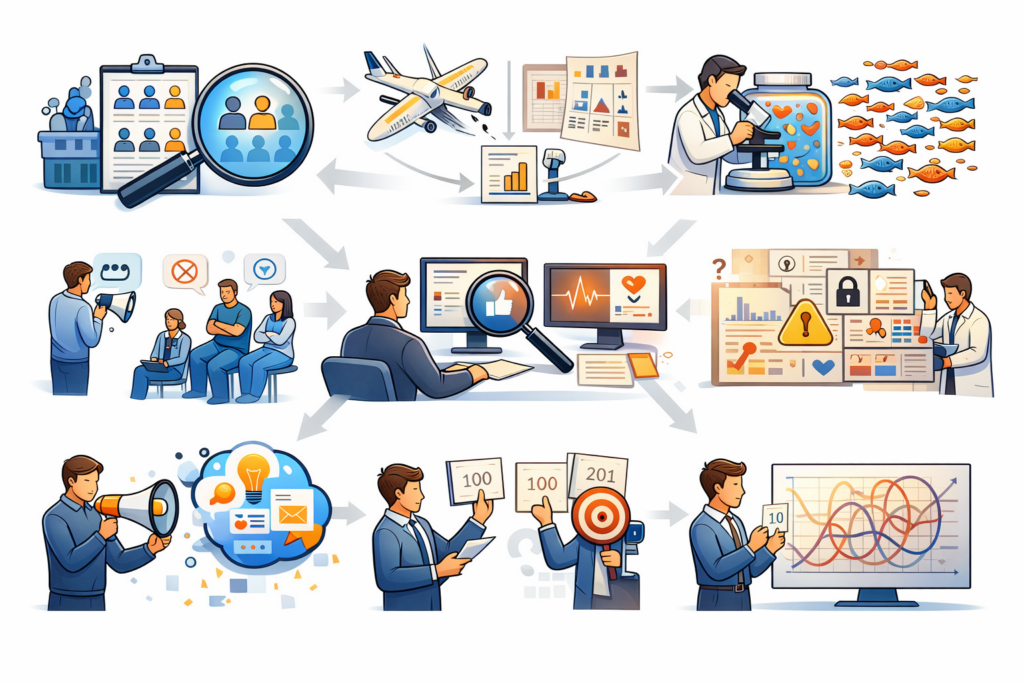
The Third-person Effect is a cognitive bias where individuals believe that media, narratives, or persuasive messages influence others more than themselves. We assume we are rational and data-driven, while others are seen as more easily swayed by framing, dashboards, headlines, or storytelling.
In data, analytics, and BI, this bias appears when leaders and teams underestimate how much interpretation, framing, and presentation shape their own decisions. Analysts may believe that charts, KPIs, or executive summaries merely inform, while assuming that “less data-literate” stakeholders are the ones influenced by visual emphasis, wording, or selective metrics. In reality, everyone is affected, including senior decision-makers and data professionals.
This bias damages decision-making by creating blind spots. Teams focus on protecting others from misleading dashboards or biased narratives, while ignoring how their own assumptions, preferred metrics, or storytelling choices influence outcomes. It leads to overconfidence in objectivity, reduced critical questioning, and unchallenged framing effects. As a result, organizations may lock into dominant narratives supported by data presentation rather than by robust analysis.
A common example from practice is executive reporting. Leadership may dismiss concerns about biased KPIs or visual framing, assuming they personally “see through” the presentation. Meanwhile, strategic decisions are driven by the same simplified charts, color coding, and narrative emphasis. The impact is subtle but serious: alternative interpretations are overlooked, and early warning signals are ignored.
You can diagnose the Third-person Effect by observing how feedback is handled. Are concerns about bias framed as an issue for “others”? Are senior stakeholders exempt from data literacy discussions? If teams rarely question how insights are framed for themselves, the bias is likely present.
Mitigation requires institutional humility. Assume that no role is immune to framing effects. Use multiple views of the same data. Rotate KPI ownership. Encourage explicit discussion about how insights are presented, not just what they show. Treat data communication as a risk surface, not a neutral channel.
The core insight is uncomfortable but necessary. Bias does not disappear with seniority or expertise. In BI, the belief that “others are influenced, not us” is itself a critical risk.