
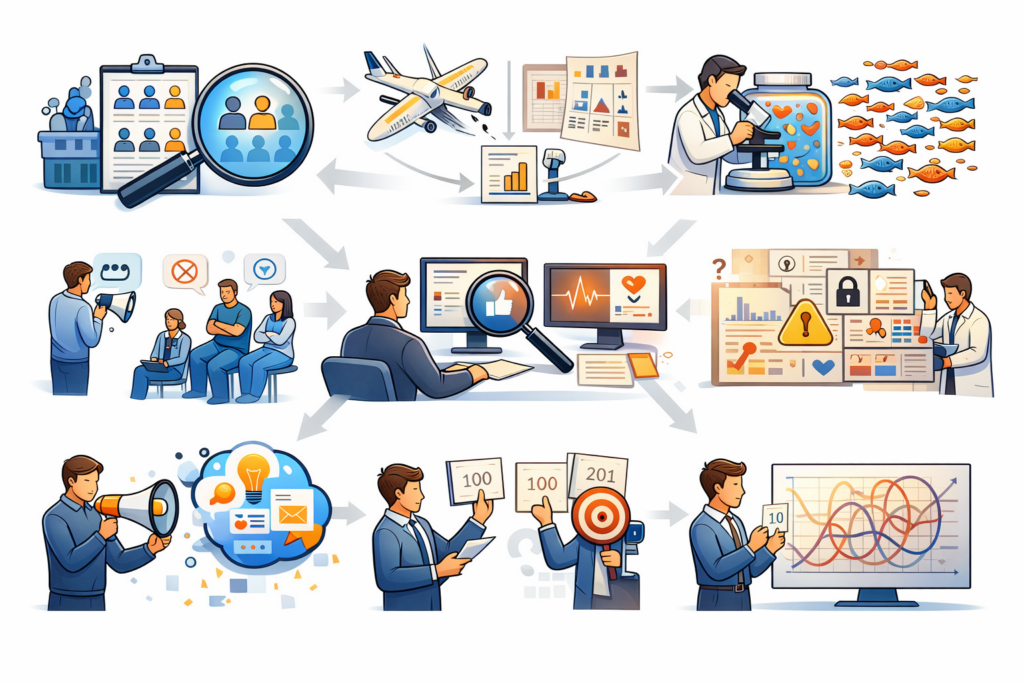
Tall Poppy Syndrome refers to the tendency to undermine, criticize, or diminish individuals who achieve notable success. In the context of data, analytics, and BI, this social bias can quietly erode team dynamics, innovation, and recognition of valuable contributions.
Within analytics teams, Tall Poppy Syndrome can appear when one data professional consistently delivers high-impact insights, builds advanced models, or successfully drives data-driven decisions. Rather than celebrating or learning from these successes, peers or managers may downplay achievements, assign undue scrutiny, or resist adopting the suggested practices. This creates a culture where excellence is met with skepticism rather than reinforcement.
The consequences are tangible. High performers may reduce their engagement, avoid proposing innovative solutions, or leave the organization. Decisions may suffer because proven approaches are ignored, and the organization loses competitive advantage. In BI projects, this can manifest as resistance to adopting new dashboards, advanced analytics methods, or process improvements simply because they originate from a standout individual.
Diagnosing Tall Poppy Syndrome requires observing team behavior and feedback patterns. Signs include disproportionate criticism of successful initiatives, hesitation to acknowledge contributions, or a cultural norm of downplaying high performance. Surveys, one-on-one discussions, and retrospective analyses can reveal these patterns.
Mitigation involves promoting a culture of recognition and learning, emphasizing collective success, and separating evaluation of ideas from the individual proposing them. Encouraging knowledge sharing, mentorship, and objective performance metrics reduces the tendency to penalize high achievers while fostering innovation.
Awareness of Tall Poppy Syndrome helps analytics leaders protect high performers and ensure that data-driven initiatives receive unbiased consideration. Creating an environment where excellence is reinforced rather than suppressed improves decision-making, adoption of insights, and overall team performance.