
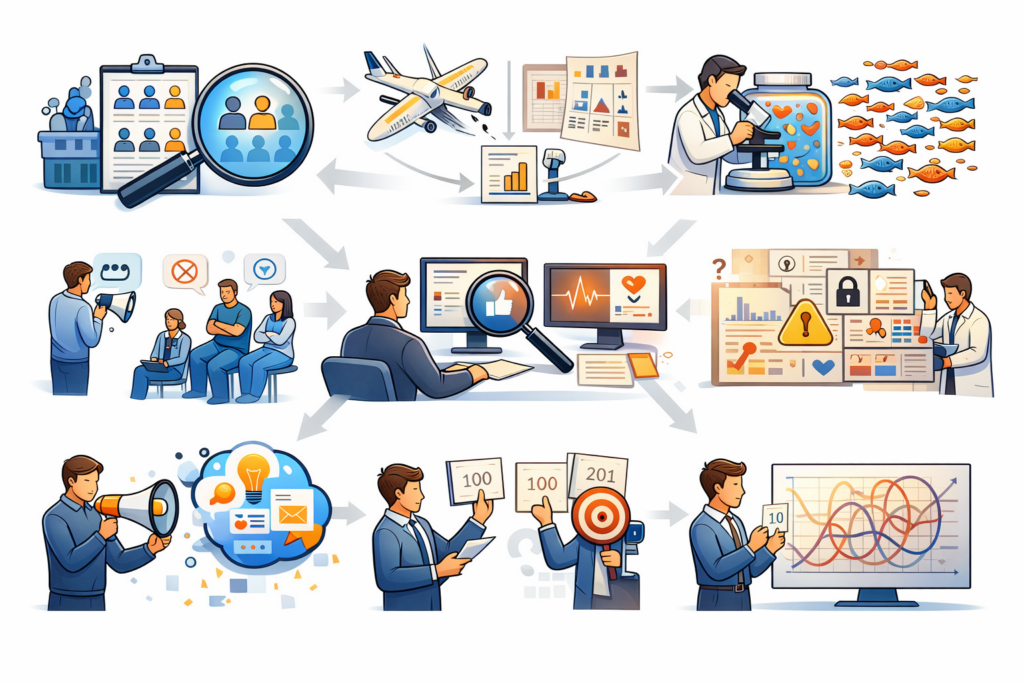
Social Loafing refers to the tendency of individuals to exert less effort when working in a group compared to when working alone. In data, analytics, and BI environments, this effect can subtly reduce productivity, slow decision making, and mask true individual contributions, ultimately impacting project outcomes.
In practice, Social Loafing often appears during large-scale data projects, collaborative dashboard development, or group analytics workshops. When tasks are distributed among team members, some may rely on others to complete critical components, assuming their contributions are less visible. This can lead to uneven workload distribution, delayed insights, and occasional errors going unnoticed.
The bias negatively affects decision-making and performance evaluation. For example, during cross-functional data initiatives, certain team members may underperform without immediate detection, causing delays in reporting or skewed analysis. Management may overestimate group efficiency while individual effort and accountability remain opaque.
Diagnosing Social Loafing requires careful observation and data collection. Comparing output from individual work versus group tasks, monitoring contribution metrics, and collecting peer feedback can reveal patterns of reduced effort. Consistently lower participation or contribution in collaborative settings signals the presence of this effect.
Mitigation strategies include assigning clear responsibilities, implementing transparent tracking of contributions, and fostering accountability through structured reporting. Smaller sub-teams, rotating roles, and regular check-ins can also counteract reduced effort. Encouraging recognition for individual achievements within group projects reinforces engagement and maintains performance standards.
Awareness of Social Loafing allows data leaders to design collaborative workflows that optimize both team dynamics and individual contributions, ensuring project outcomes reflect actual effort and skill rather than diluted participation.