
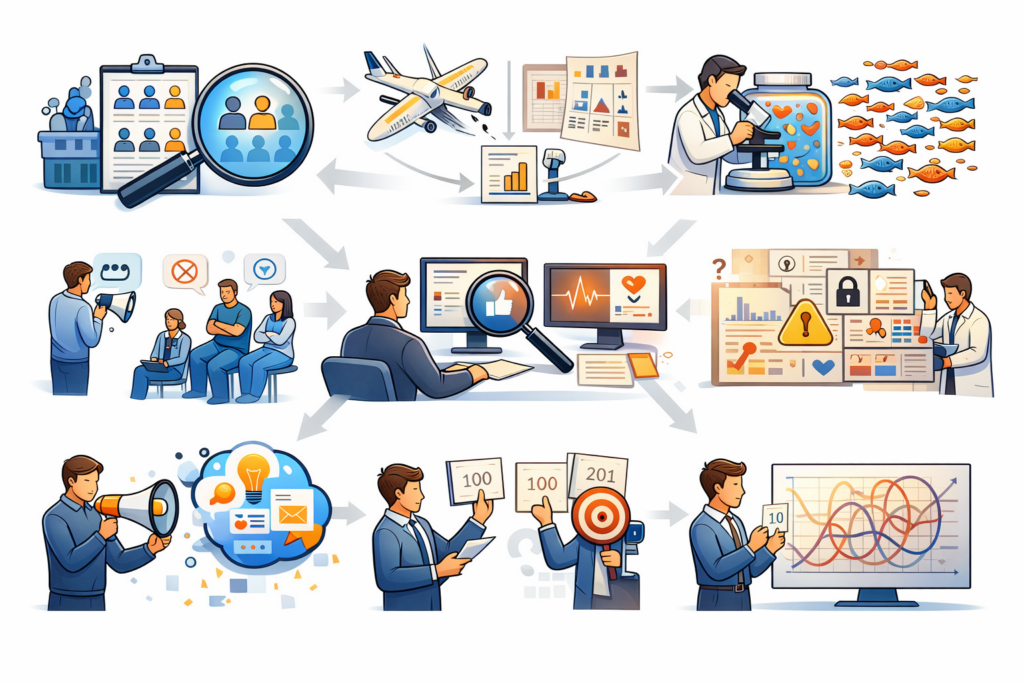
Social Desirability Bias occurs when respondents alter their answers to appear socially acceptable or favorable. In a data context, this bias can subtly distort survey results, feedback mechanisms, and any data collection reliant on human input.
In BI and analytics, the bias emerges in employee surveys, customer feedback, or market research where participants provide responses they think are expected rather than their true opinions or behaviors. For example, a team may overreport compliance with a new process or a customer survey may overstate satisfaction to appear polite. While the data may look consistent or positive, it hides underlying issues that need attention.
The consequences of Social Desirability Bias are critical. Decisions based on skewed data can misallocate resources, overestimate performance, or fail to address pain points. For instance, if leadership believes engagement scores are high due to biased responses, they might neglect interventions that are genuinely needed, leading to stagnation or hidden dissatisfaction.
Diagnosing this bias requires triangulating data sources. Look for discrepancies between self-reported behaviors and objective metrics, such as system logs, sales data, or anonymized feedback. Patterns of uniform positive responses across sensitive topics are also indicative.
Mitigation strategies include anonymizing surveys, framing questions neutrally, and using indirect measurement techniques. Combining qualitative insights with objective analytics can reduce reliance on subjective responses, providing a clearer view of reality.
Understanding and accounting for Social Desirability Bias ensures decisions reflect actual behavior and sentiment rather than curated perceptions. This strengthens trust in analytics and prevents costly misjudgments.