
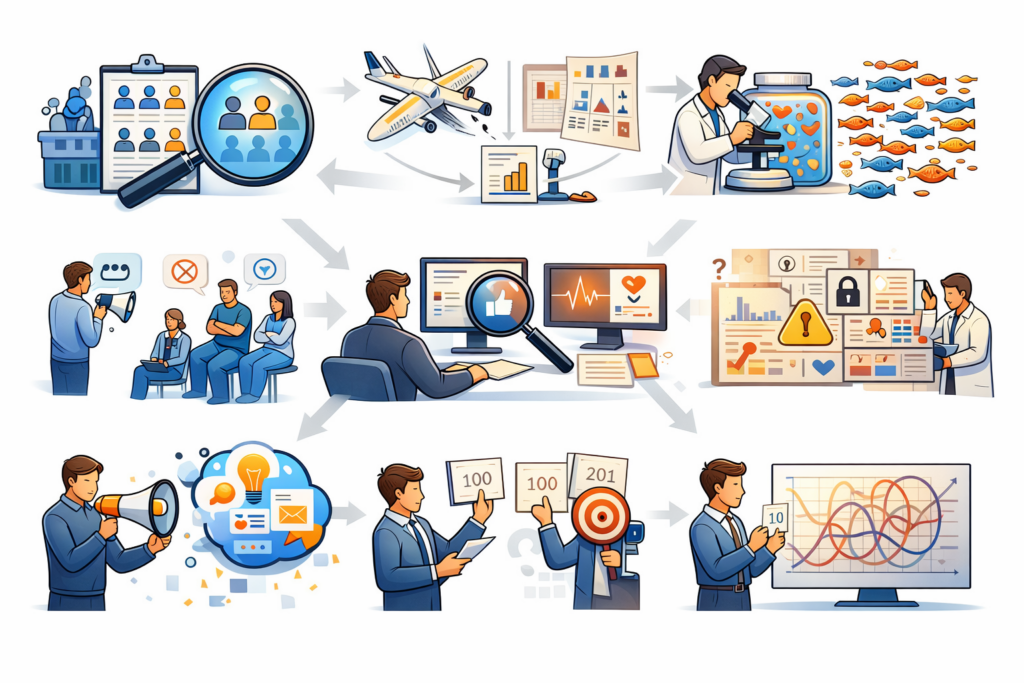
Shared Information Bias occurs when groups focus discussions predominantly on information that all members already know, while unique or dissenting insights receive less attention. In business intelligence and analytics, this bias can subtly but significantly impact decision-making.
In the context of data projects, Shared Information Bias often appears during team meetings or workshops reviewing dashboards, KPIs, or analytical models. Teams may repeatedly discuss high-level metrics everyone is aware of, while novel findings from data exploration or less obvious correlations are ignored. This happens because familiar information feels safer, easier to process, and less contentious than new, unfamiliar data.
The consequences are tangible. Decisions may be based on common knowledge rather than full datasets, leading to missed opportunities or blind spots. For example, a marketing analytics team might overemphasize overall sales trends discussed in every meeting, while neglecting insights from segmented customer behavior analysis. This oversight could result in suboptimal targeting and lost revenue potential.
To diagnose Shared Information Bias, observe meeting dynamics: Are new data points or minority opinions consistently overlooked? Review whether decisions consistently align with information everyone already knew rather than emerging findings. Surveys or post-project reviews can highlight neglected insights.
Mitigation requires deliberate effort. Assign roles to surface unique information, create structured agendas emphasizing new data, and encourage an environment where dissenting or unfamiliar insights are valued. Facilitators should actively probe for overlooked signals and ensure every piece of analysis receives attention before decisions are finalized.
Recognizing Shared Information Bias is crucial for high-performing analytics teams. Embracing diverse data points, including those less obvious, strengthens decisions, uncovers hidden opportunities, and ensures a truly data driven culture.