
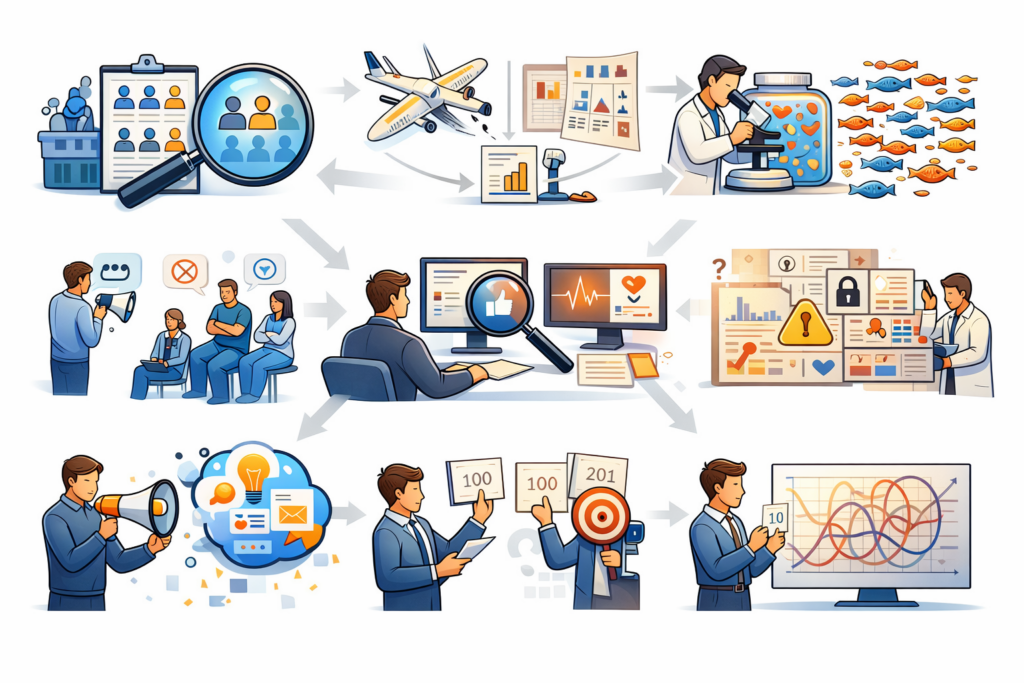
Outgroup Homogeneity Bias is the tendency to perceive members of a different group as more similar to each other than they actually are, while seeing one’s own group as diverse. In data, analytics, and business intelligence, this bias can subtly shape assumptions, analysis, and decisions.
In BI contexts, this bias appears when teams generalize about customer segments, competitors, or external stakeholders. For example, a data team might assume all users from a certain region behave identically, ignoring nuanced patterns in behavior, preferences, or risk profiles. Similarly, competitor analysis can become oversimplified, treating all rivals as uniform, which can lead to flawed strategic planning.
The consequences are tangible. Decisions based on this bias may overlook opportunities, misallocate resources, or fail to address real user needs. Marketing campaigns might underperform because assumptions about external audiences are overly broad. Risk models can be skewed, missing pockets of variability that could impact forecasts or operational plans.
Diagnosing Outgroup Homogeneity Bias involves testing assumptions against segmented data, exploring variance within external groups, and encouraging cross-team discussion to challenge stereotypes. Audit dashboards and analytics pipelines can reveal if patterns are being oversimplified.
Mitigation requires emphasizing granularity and validation. Segment data thoughtfully, incorporate diverse perspectives, and implement systematic checks for assumptions about external groups. Encourage curiosity and question generalizations to ensure analytics reflect reality rather than preconceptions.
For leaders in analytics and BI, recognizing Outgroup Homogeneity Bias is critical: respecting variability outside your immediate team or company improves decisions, forecasts, and engagement strategies.