
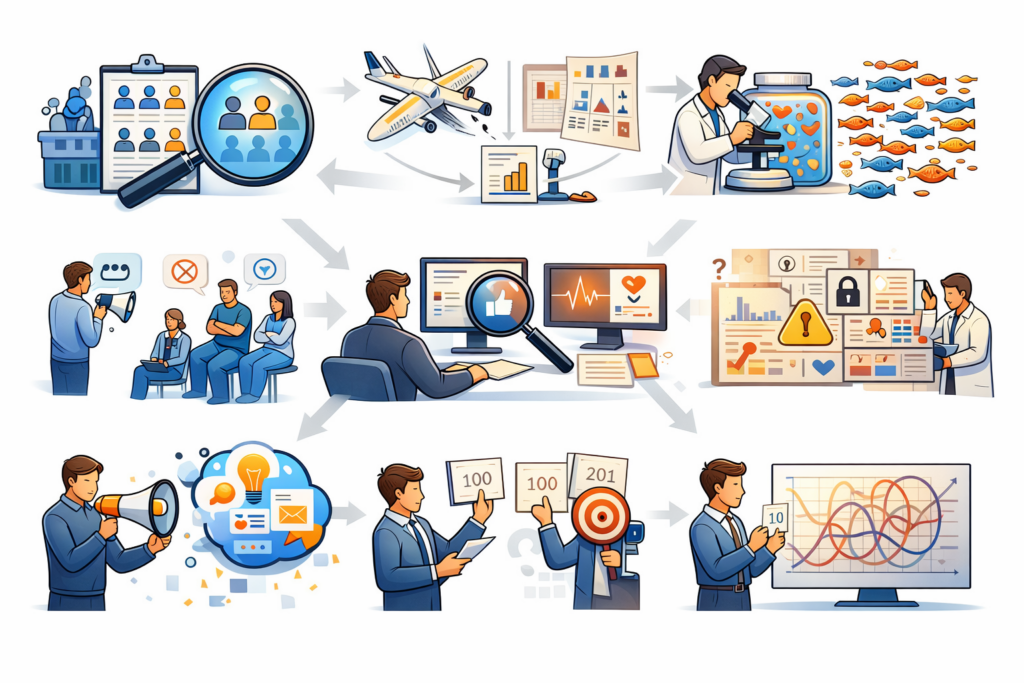
Ingroup bias is the tendency to favor members of one’s own group over outsiders. In data and BI contexts, it manifests as preferential treatment of ideas, analyses, or data sources that originate within the familiar team or department, often at the expense of objectivity or wider insight.
In practice, ingroup bias can appear when internal teams overvalue their own dashboards, models, or datasets while discounting contributions from other teams or external sources. For instance, a data engineering team might prioritize internal metrics over customer-provided or third-party benchmarks, believing their own work is inherently superior. This can skew prioritization, resource allocation, and decision-making.
The consequences are tangible: decisions may be based on incomplete or biased information, cross-team collaboration suffers, and innovation is stifled. Over time, ingroup bias can also create echo chambers, reinforcing assumptions that are never challenged by outside perspectives.
Diagnosing ingroup bias involves evaluating how data and insights are sourced and weighed. Signs include consistent preference for internal analyses, dismissal of external input without review, and lack of cross-departmental validation. Surveys, review audits, and comparing decisions against external benchmarks can help identify the effect.
Mitigation requires fostering a culture of open evaluation and cross-functional collaboration. Encourage transparent data sharing, implement peer review across teams, and weigh all sources on merit rather than origin. Decision frameworks should explicitly consider diverse data inputs to counteract natural ingroup preferences.
Even high-quality internal data is vulnerable to bias if the context is ignored. Awareness of ingroup bias ensures balanced decisions and maximizes value from all available information.