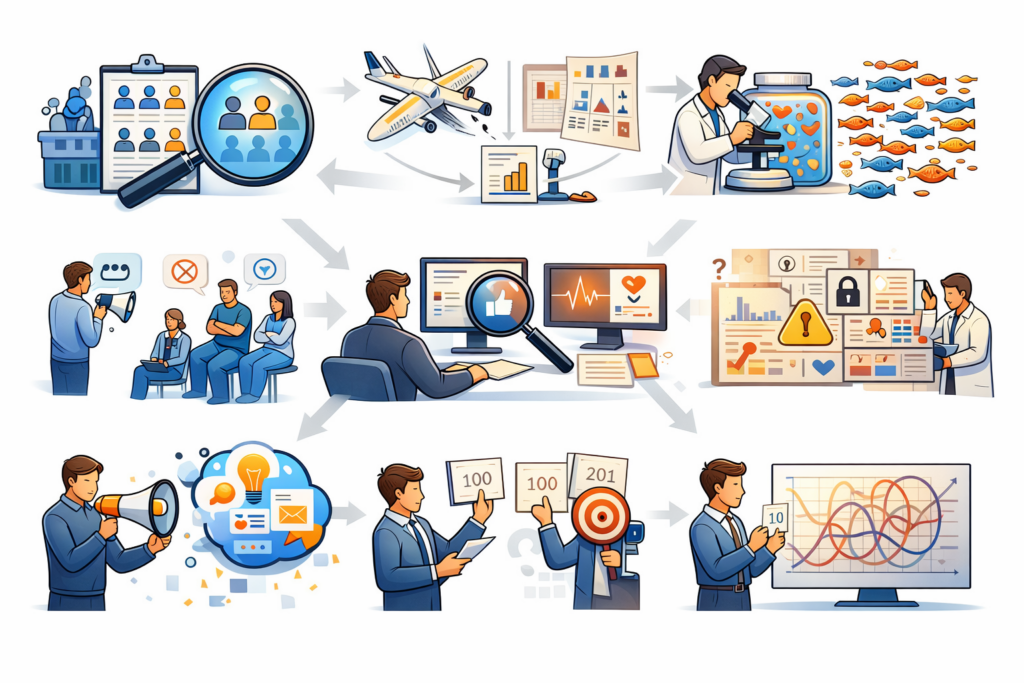
The Filter Bubble is a psychological and algorithmic bias where technologies and platforms show users only content that reinforces their existing beliefs, opinions, and decisions.
In the context of data work and business intelligence, this means that analysts, managers, and data teams may unknowingly operate with a narrow view of data, ignoring alternative perspectives or relevant context.
A common example is a personalized dashboard or report that automatically highlights certain metrics based on the team’s previous decisions, while other warning signals remain hidden. In practice, this can lead to selective interpretation of results—for instance, when an analyst ignores declining sales in a smaller region because the algorithm prioritizes larger segments. The result is skewed decision-making that can negatively impact investments, planning, or strategic direction.
Diagnosing a Filter Bubble in your team can be done by reviewing the diversity of data sources and reports, checking whether dashboards and BI tools are regularly updated independently of previous decisions, and auditing visualizations that repeatedly emphasize the same trends.
Mitigation involves incorporating diverse data sources, regular peer reviews of reports, deploying algorithms that present random or alternative perspectives, and consciously seeking differing viewpoints before critical decisions. The key takeaway is that high-quality data alone is not enough—the way algorithms and visualizations present it can significantly influence outcomes.
The Filter Bubble teaches that critical thinking and diversity of perspective are as important as the data itself. Without them, our decisions risk being skewed and less effective.