
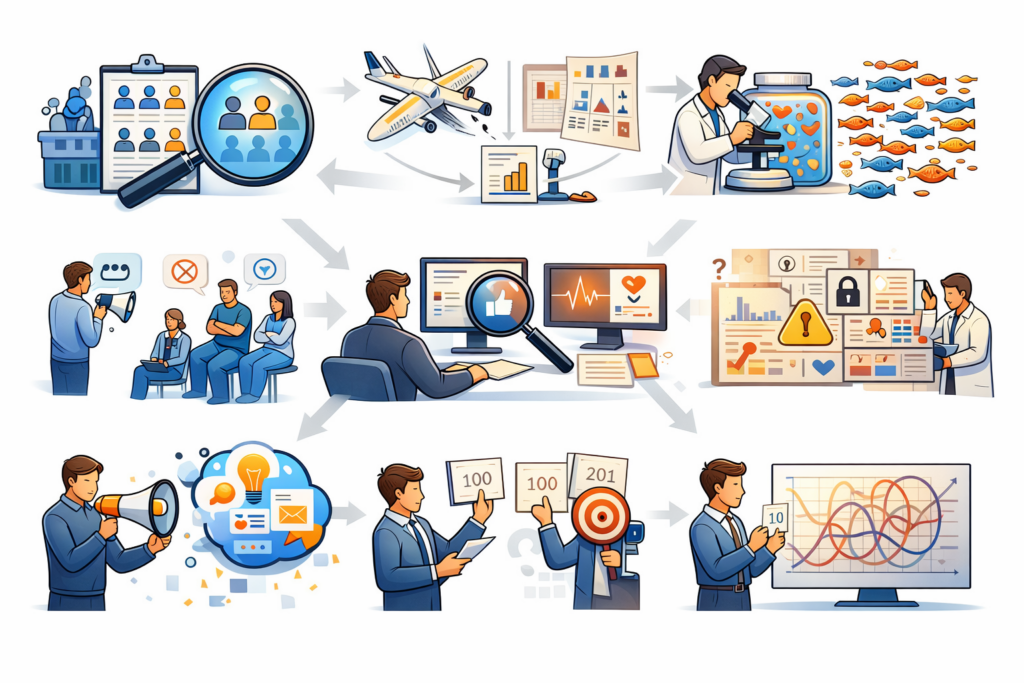
False Uniqueness Bias occurs when individuals underestimate how many others share their abilities, traits, or insights. In data, analytics, and business intelligence, this bias can distort team dynamics, project planning, and strategic decisions.
In BI and analytics, the bias often surfaces when team members assume their approach, skill set, or insights are rare and unique. For instance, a data scientist might overvalue a novel method they developed, assuming no one else in the organization or industry can replicate it. Product managers might overestimate their ability to identify market trends, leading to overconfidence in project prioritization. This can result in redundant work, misallocation of resources, or overcomplicated models that add little real value.
The bias also affects collaboration. Teams may fail to leverage the collective expertise of colleagues, believing their own contributions are exceptional. It can lead to siloed decision-making, missed knowledge-sharing opportunities, and underutilization of organizational talent.
Diagnosing False Uniqueness Bias involves benchmarking skills, methods, and assumptions against peers and industry standards. Regular peer reviews,
collaborative workshops, and transparent knowledge-sharing sessions help reveal where perceptions of uniqueness diverge from reality.
Mitigation strategies include fostering a culture of humility, encouraging feedback, and highlighting examples where multiple team members or departments independently achieved similar results. Structuring decisions around evidence rather than perceived uniqueness ensures efforts are aligned with actual organizational capabilities.
Insight: overestimating uniqueness can inflate confidence and reduce efficiency. In analytics, recognizing shared capabilities allows teams to optimize resources, replicate best practices, and avoid redundant effort.