
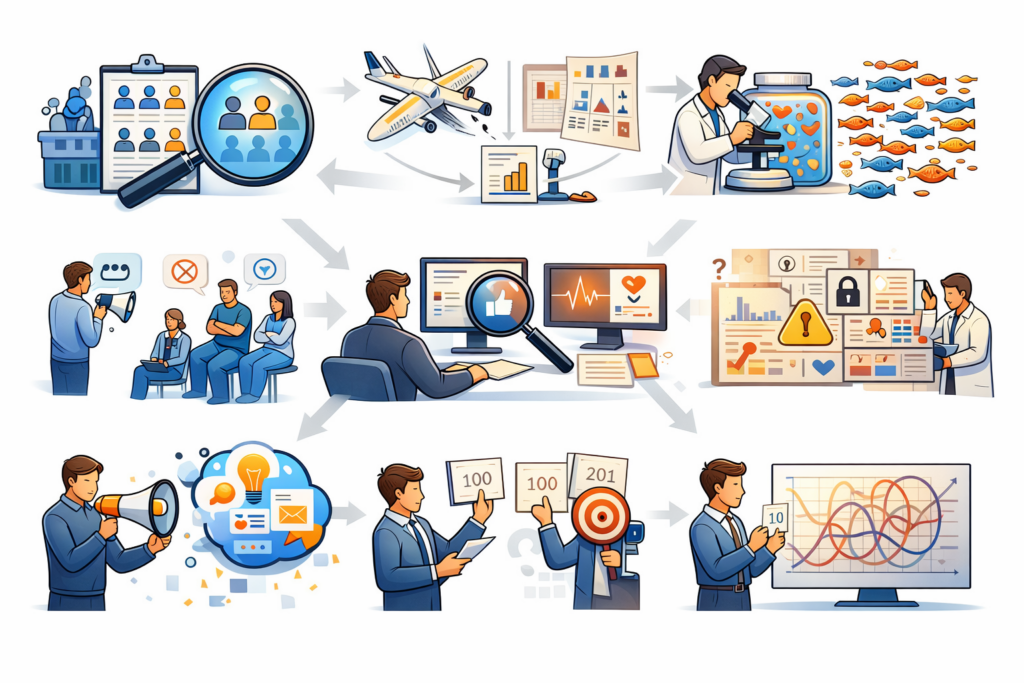
The False Consensus Effect occurs when we assume that others share our beliefs, preferences, or assumptions. While natural in human cognition, this bias can distort data interpretation and decision-making in business intelligence and analytics.
In the context of BI, this bias often manifests when teams project their own perspectives onto customers, stakeholders, or other departments. For instance, analysts may assume that a particular feature is universally valued because they personally favor it, or leadership might believe a chosen strategy is widely accepted within the company. This can result in overestimating adoption rates, misjudging customer preferences, or designing dashboards that reflect internal priorities rather than actual user needs.
A concrete example is product development: a team creates a reporting tool they find intuitive and assumes end-users will share the same ease of use. Feedback may later reveal low engagement, wasted resources, and delayed ROI. Similarly, marketing campaigns based on internal assumptions rather than validated data can fail to resonate with target audiences.
Detecting this bias requires gathering objective feedback and validating assumptions against diverse data sources. Regularly surveying stakeholders, running A/B tests, and analyzing behavior rather than opinions can reveal misalignments. Teams should ask: “Are we seeing reality, or just a mirror of our own perspective?”
Mitigation involves creating structured feedback loops, encouraging dissenting viewpoints, and using quantitative validation for decisions. Incorporate diverse perspectives in hypothesis generation, and design experiments to challenge internal consensus.
Insight: assuming agreement can blind teams to critical variation in data, users, and context. Data-driven professionals must actively separate personal assumptions from measurable reality.