
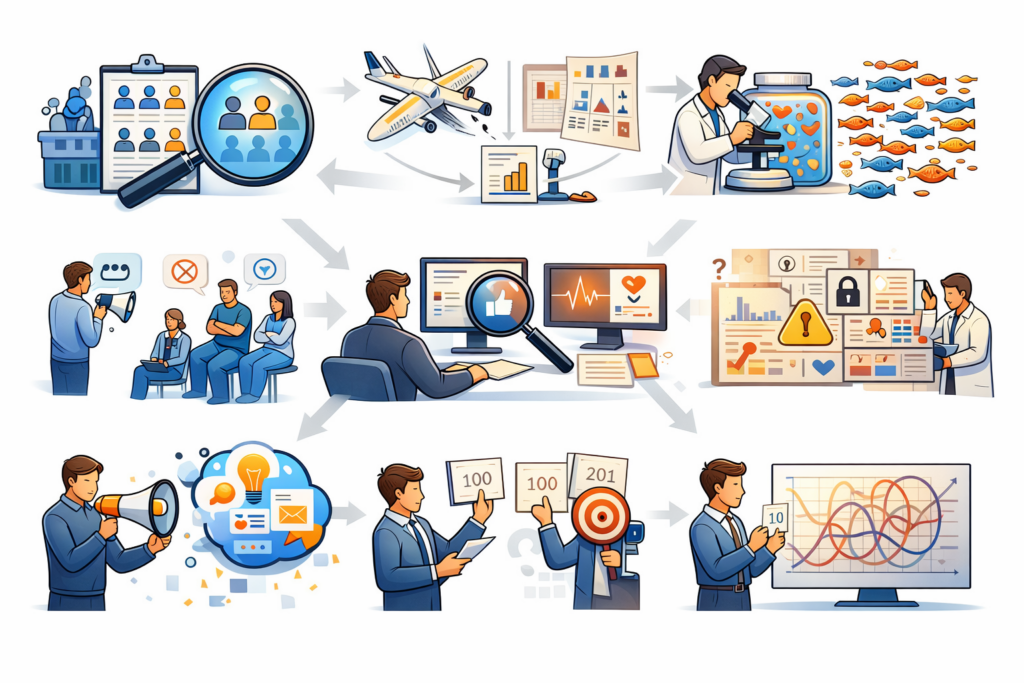
Deindividuation is a psychological bias where individuals lose self-awareness and self-control in group settings, leading to behavior they might not exhibit alone. In data, analytics, and BI contexts, this bias can subtly distort team decisions, project priorities, and even interpretation of results.
Within analytics teams, group discussions or review sessions can amplify deindividuation. For example, during a data strategy meeting, members may conform to dominant opinions or escalate aggressive criticisms, suppressing dissenting voices. Similarly, when evaluating dashboards or models, group consensus may push for features or metrics that are flashy but misaligned with business objectives.
This collective behavior can reduce critical thinking, leading to overconfidence in findings or the adoption of impractical solutions. The consequences are tangible. Projects may overcommit to complex analytics that stakeholders cannot operationalize. Teams may neglect alternative hypotheses or risk assessments because dissenting perspectives are socially suppressed. In one case, a BI team collectively approved a predictive model without challenging underlying assumptions, resulting in inaccurate forecasts that affected operational planning.
Diagnosing deindividuation involves observing group interactions. Warning signs include unquestioned consensus, absence of critical debate, or members deferring excessively to authority. Surveys or retrospectives can also reveal perceived pressure to conform or reluctance to challenge group norms.
Mitigation requires structured decision-making processes. Encourage anonymous input during evaluations, assign devil’s advocates, and rotate leadership in group discussions. Promote a culture where challenging assumptions is safe and valued. Clearly separate individual accountability from group influence to maintain critical judgment.
The key insight: even technically capable teams can make flawed decisions when group dynamics override individual reasoning. Awareness and deliberate intervention preserve objectivity and ensure analytics serve business goals rather than group conformity.