
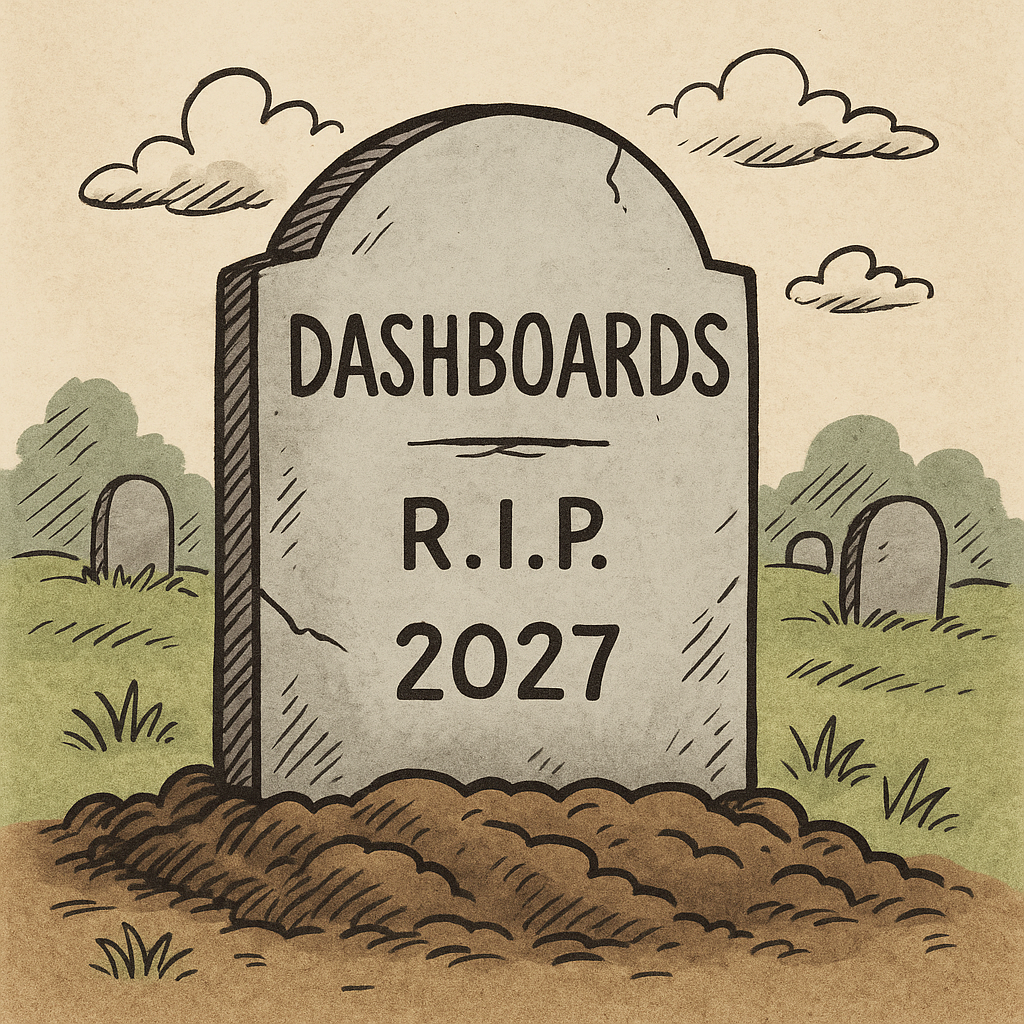
Every now and then, I hear the prediction that dashboards will soon “die”. It’s a catchy phrase, easy to spread, but I don’t believe it. To me, dashboards are not going away. They will remain—but their role and meaning are changing.
If we look back, the first phase of data work is largely behind us. That phase was all about moving data from source systems into a consolidated analytics layer. Companies invested enormous amounts of time and resources into building data warehouses, data lakes, pipelines, and BI tools. This was a critical foundation—but having the data stored and visualized does not automatically mean it creates real business value.
Now we are entering the second phase. This phase is no longer about data availability—it’s about turning data into business impact. In this context, dashboards serve as a starting point. They provide an overview, show trends, allow monitoring. But they should not remain the final destination.
The future lies in autonomous systems. Systems that can identify what really matters and deliver it to the right person, depending on their role. The key is to avoid overload—no one wants hundreds of notifications a day. The real value comes from filtering out the noise and providing only what’s essential, in a way that clearly shows business impact.
This changes the paradigm of how we use data. It’s no longer “go check the dashboard and find what you need.” Instead, it’s “here is exactly what you need to know right now.” Dashboards will still exist—especially where visualization is useful, where we need to verify numbers or understand the bigger picture. But the center of gravity is shifting toward intelligent systems that surface the signal without the noise.
Personally, this is the direction I find most meaningful. That’s also why I’m working on anomalyguard.com. The goal is to move from passive dashboard monitoring toward proactive insight delivery. Not overwhelming users, but helping them focus on the few things that truly matter and drive business outcomes.
So no, dashboards are not dying. They are the foundation stone that will remain. But relying on them alone would be limiting. Their role is shifting—from the end point to the launch pad toward something much more powerful.
The future of data is not in endless charts and tables. It’s in the combination of visual tools, autonomous agents, and intelligent systems that don’t just show what happened, but also predict what might happen and recommend what to do next. That’s where we’re heading—and it’s far more exciting than the debate about whether dashboards will survive.
Subscribe to Our Newsletter