
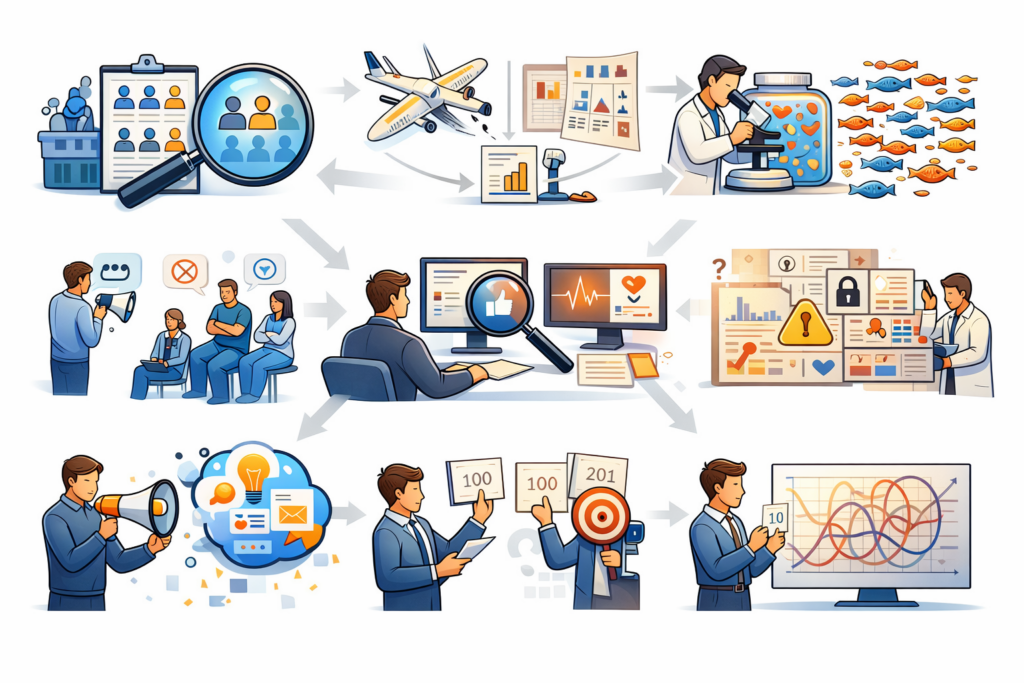
The Cross-Race Effect is a psychological phenomenon where people have more difficulty remembering faces from ethnic groups different from their own. While this bias is usually discussed in perception and identification, its consequences extend into data work, analytics, and business intelligence (BI).
In data projects, the bias can affect data quality during collection or annotation. For example, in facial recognition models or customer detection algorithms, annotators or analysts may unintentionally label or categorize faces from one ethnic group more accurately than others. In BI, the bias can manifest when decision-making unconsciously favors customer segments that are visually or culturally similar to the analytics team, while other segments are overlooked.
The consequences are real – missegmentation, inaccurate models, and skewed customer analysis lead to missed opportunities and reduced strategy effectiveness. A practical example: a retail recommendation algorithm underrepresented minority customer groups, resulting in lower conversions for those segments and a distorted view of the overall market.
Detecting this bias involves auditing datasets and models, checking sample distributions across ethnic or demographic segments, and monitoring annotation quality.
Mitigation includes diverse teams for data annotation, strategies for balanced data collection, regular testing of models across different segments, and analyst training on unconscious biases.
Even technically sound data can produce flawed results if unconscious biases are present. Awareness of the Cross-Race Effect and its impact helps ensure decisions are more objective and inclusive.