
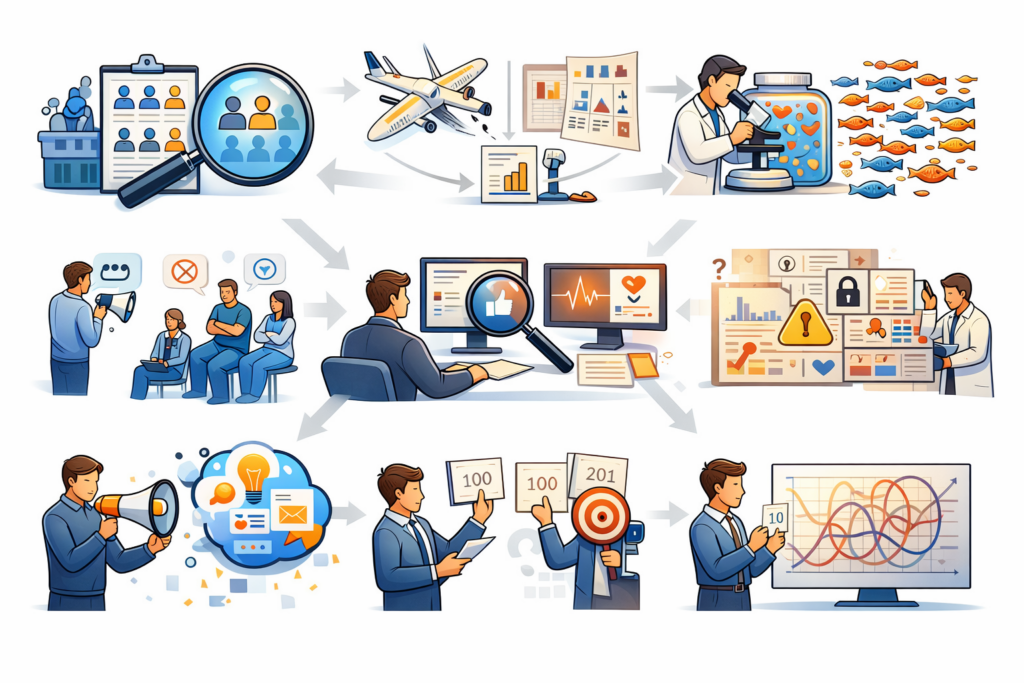
The Cheerleader Effect is a cognitive bias where individuals appear more competent, capable, or appealing when seen as part of a group rather than alone. In professional contexts, this can distort perception of individual performance, contribution, or insight within data teams or projects.
In BI and analytics, this bias can influence decision-making, reporting, and stakeholder perception. For instance, a data project presented by a strong, cohesive team may appear more robust or credible than the same analysis presented by a single analyst. Stakeholders may overvalue group outputs, assuming consensus equals correctness, while ignoring critical individual insights or discrepancies. Similarly, dashboards or reports with visually impressive, aggregated data can appear more authoritative, even if underlying individual metrics are weak or inconsistent.
The consequences include overestimating group decisions, undervaluing individual contributions, and misallocating resources based on perceived group strength rather than data quality. A real-world example could involve a multi-member analytics team delivering a compelling quarterly report. Executives may assume flawless analysis due to team size and collaboration,
potentially overlooking errors or assumptions within the dataset that a lone analyst might have flagged.
Diagnosis involves comparing outcomes of group versus individual analyses and evaluating whether decisions disproportionately favor group-presented insights. If individual contributions are routinely undervalued or overlooked, the bias is likely present.
Mitigation requires emphasizing transparent evaluation criteria, focusing on data quality over presentation, and encouraging independent verification of analyses. Decision frameworks should separate group dynamics from objective data assessment.
Groups can amplify credibility, but perception does not guarantee correctness. Awareness of the Cheerleader Effect ensures that in data-driven organizations, individual insights and rigorous analysis remain central to decision-making.