
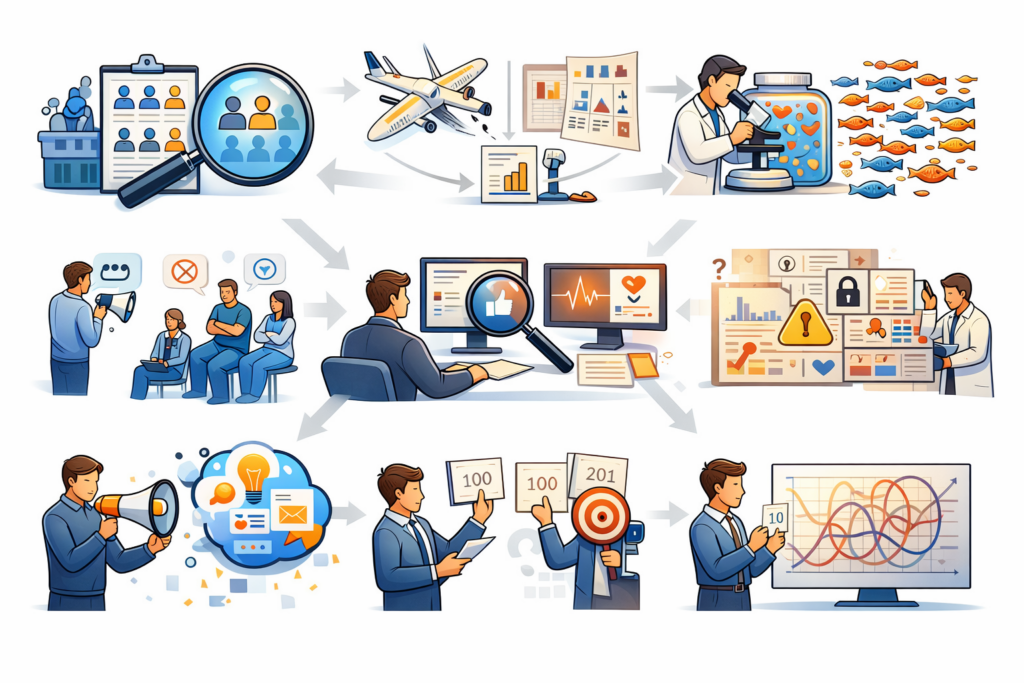
Affinity Bias is a psychological phenomenon where people prefer individuals who are similar to them or with whom they identify. In data and BI, this bias appears in team member evaluation, partner selection, project prioritization, or interpretation of results.
A common scenario: when selecting an analytics team or evaluating project proposals, managers tend to favor colleagues with similar backgrounds, work styles, or professional experiences. This tendency can lead to homogeneous teams, limited creativity, and missed innovative approaches.
Practical example: a company implemented a new BI tool, and the project team was composed mostly of members with similar experiences and work styles. Discussions were one-sided, and alternative solutions that could improve efficiency or reduce costs were insufficiently considered. Result: below-average return on investment and less adaptable solutions.
The bias can be detected by analyzing decision-making processes and team dynamics: observe whether proposals or team members are consistently favored based on their similarity to leadership or evaluators.
Mitigation includes diverse teams, systematic and anonymous proposal evaluations, peer review, and standardized decision criteria. Discussions should reflect multiple perspectives and assess proposals based on objective data and impact, rather than personal preferences.
For data leaders, it is crucial to recognize that affinity bias can reduce decision quality, innovation, and ROI. Systematic measures enhance objectivity and team effectiveness.