
Alerting is supposed to reduce risk. In many data teams, it does the opposite. Instead of providing early warnings, alerts become background noise. Important signals are missed, not because the system is silent, but because it is too loud.
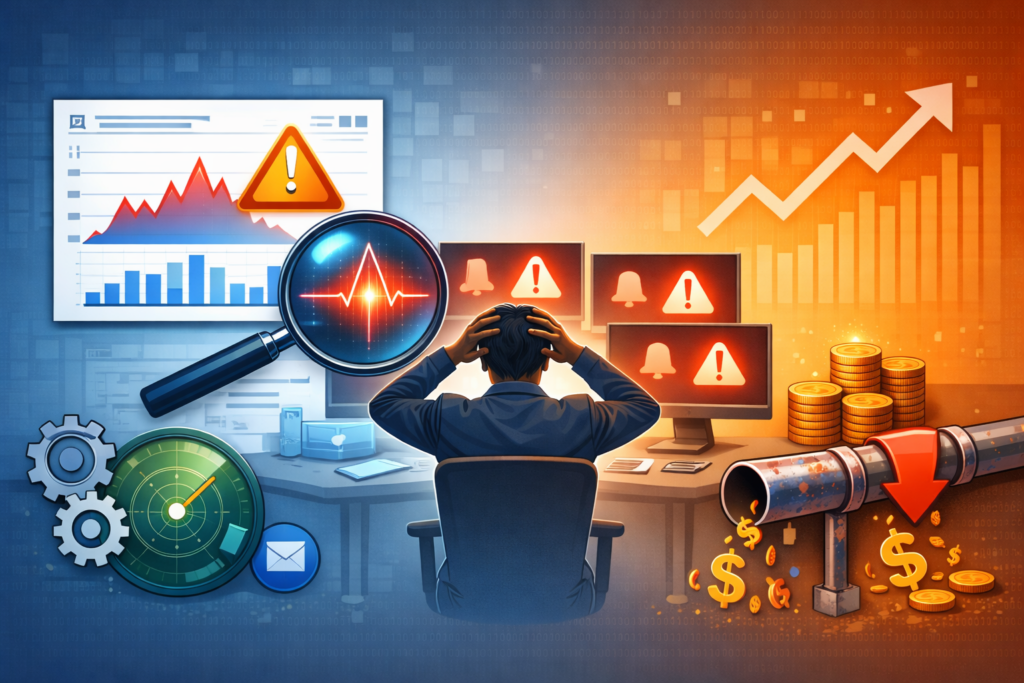
False alerts are not just an annoyance. They change behavior. When teams stop trusting alerts, they stop reacting to them. At that point, the alerting system still exists, but it no longer protects the business.
The first sign is alert fatigue. Alerts fire frequently, often during normal fluctuations or expected changes. At first, the team reacts to every notification. Over time, the response slows. Alerts get skimmed, postponed, or ignored entirely. When a real issue appears, it looks no different from the noise that came before it.
The second sign is constant manual tuning. Thresholds are adjusted again and again to reduce noise. One week they are too sensitive, the next they are too loose. Every change in seasonality, traffic, or product behavior forces another round of adjustments. Instead of providing stability, the alerting system becomes another system that needs babysitting.
The third sign is silent failures. Metrics that matter fail without triggering any alert. Teams only discover the problem when it shows up in a report, a customer complaint, or a business review. This is often the most dangerous symptom, because it creates a false sense of safety. Alerts are firing, but they are not firing on the right things.
The fourth sign is human filtering. Teams start to rely on tribal knowledge to decide which alerts matter. Certain alerts are known to be harmless and are routinely ignored. Others are treated as urgent. This logic lives in people’s heads, not in the system. When those people are unavailable, context is lost and response quality drops.
The fifth sign is declining trust in data. When alerts are unreliable, teams begin to question the metrics themselves. Was this spike real or just noise. Is this drop meaningful or expected. Instead of enabling faster decisions, alerts introduce hesitation and second guessing.
These signs often appear together. Alert fatigue leads to manual tuning. Manual tuning leads to missed signals. Missed signals lead to reactive investigations. Over time, the team spends more effort managing alerts than benefiting from them.
The root cause is usually the same. Most alerting systems rely on static thresholds applied to dynamic systems. As behavior changes, the thresholds become outdated. Normal variation triggers alerts, while real anomalies slip through. The system is technically working, but functionally broken.
Effective alerting requires a shift in focus. Instead of alerting on absolute values, teams need to alert on unusual behavior. Instead of static thresholds, they need adaptive detection. And instead of flooding teams with notifications, they need to surface only what is statistically and operationally meaningful.
When alerting works, teams respond faster, not slower. They trust the signal. They act with confidence. And they spend less time debating whether an alert is real.
If your data team is overwhelmed by alerts but still surprised by incidents, the problem is not alerting volume. It is alert quality. The goal is not fewer alerts. The goal is alerts you believe.
A quick diagnostic
Ask your team one question:
Which alerts did we ignore last week that would matter if they were real?
If no one can answer confidently, your alerting system is already failing silently. A short review of your current alerts and recent incidents is often enough to reveal whether false alerts are hiding real risk. That clarity alone is a strong starting point.