
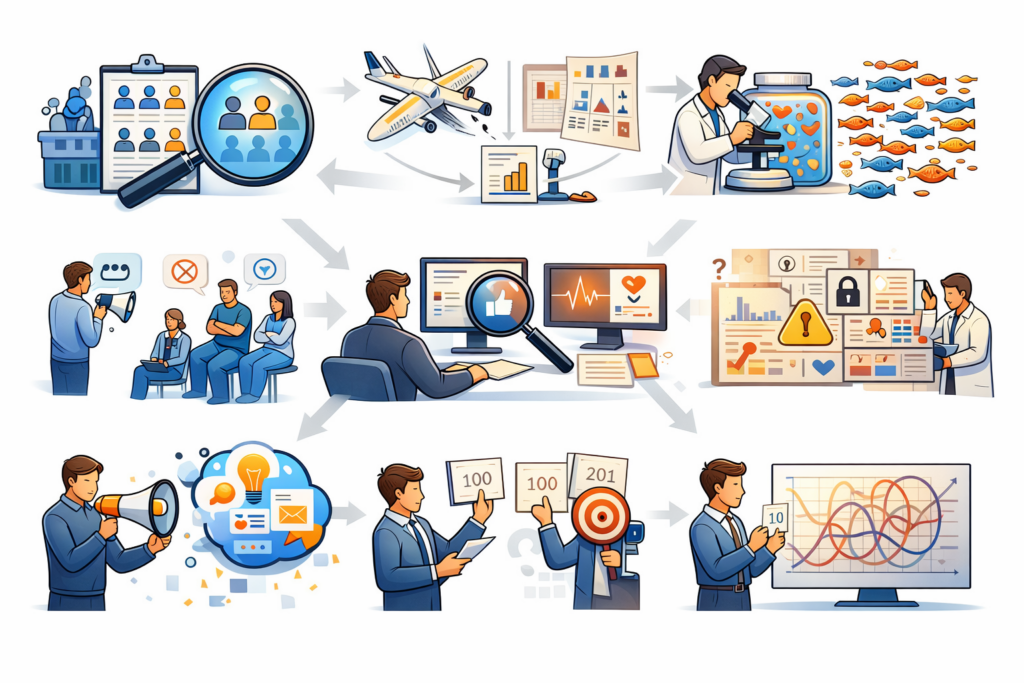
Groupthink is a cognitive bias where group pressure leads individuals to conform to the dominant opinion, reducing critical evaluation of information. Essentially, the need for agreement outweighs objective assessment of data and risks.
In data analytics and BI, this bias appears during collective decision-making on report interpretation, KPI selection, or data product design. A common example is a team that overlooks dissenting views or warning signals to maintain discussion harmony. For instance, a team may accept an overly optimistic sales forecast simply because the majority or a leader supports it, even when some indicators suggest risk.
The consequence is increased likelihood of poor decisions, incorrect investments, and diminished trust in analytics. In practice, this occurred during decisions about launching a new product, where the team ignored signals of low customer engagement because the consensus was stronger than individual analysis.
Diagnosis involves observing team decision dynamics: if differing opinions are suppressed, members avoid asking critical questions, and decisions are made quickly without exploring alternatives, Groupthink is present.
Mitigation involves structured decision-making processes, such as anonymous assessments, actively seeking differing opinions, and systematically reviewing assumptions and alternative scenarios. Facilitators should encourage dissent and create an environment where critical feedback is welcomed.
Takeaway: team consensus can reduce the quality of data-driven decisions. Critical review and diversity of opinions are essential for accurate and reliable analytics insights.