
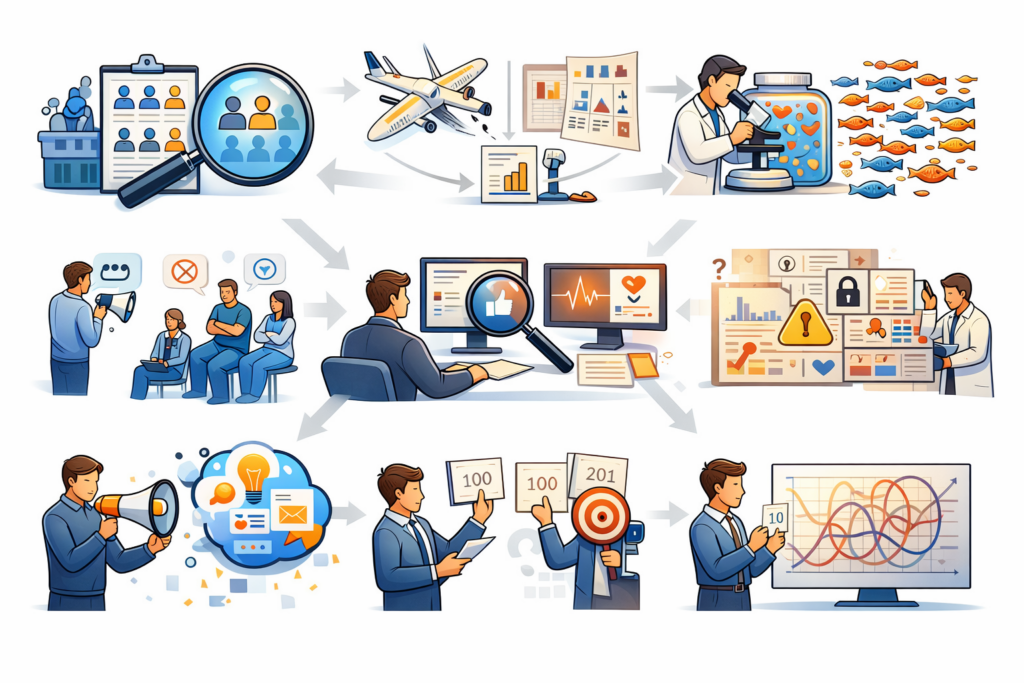
The Bystander Effect is a cognitive bias in which the presence of multiple people in a situation decreases the likelihood that an individual will act, as they expect someone else to take initiative.
In data analytics and Business Intelligence (BI), this bias often appears in responsibility for decisions, data quality, or interpretation of analytical results.
In practice, this can manifest when a team of analysts works on the same data report, yet no one ensures quality control because everyone assumes someone else will handle it. The result can be inaccurate dashboards, misleading insights, or executive decisions based on unchecked data. This effect also shows up in BI project management, where responsibility for monitoring and updating data pipelines is dispersed, leading to slower incident resolution and decreased trust in the data.
Detecting the bias involves analyzing processes and responsibilities – observe whether tasks are consistently deferred and whether no one takes initiative when they should. Indicators include frequent delays, unresolved incidents, or low quality control effectiveness.
Mitigation includes clearly defining responsibilities, implementing accountability frameworks, and holding regular check-ins that require concrete actions from individuals. Process automation, ownership tables, and rotating roles can also minimize the risk of inaction.
The Bystander Effect reminds us that even in data teams, collective presence can weaken individual responsibility and compromise decision quality. Clear rules and systematic oversight are essential.