
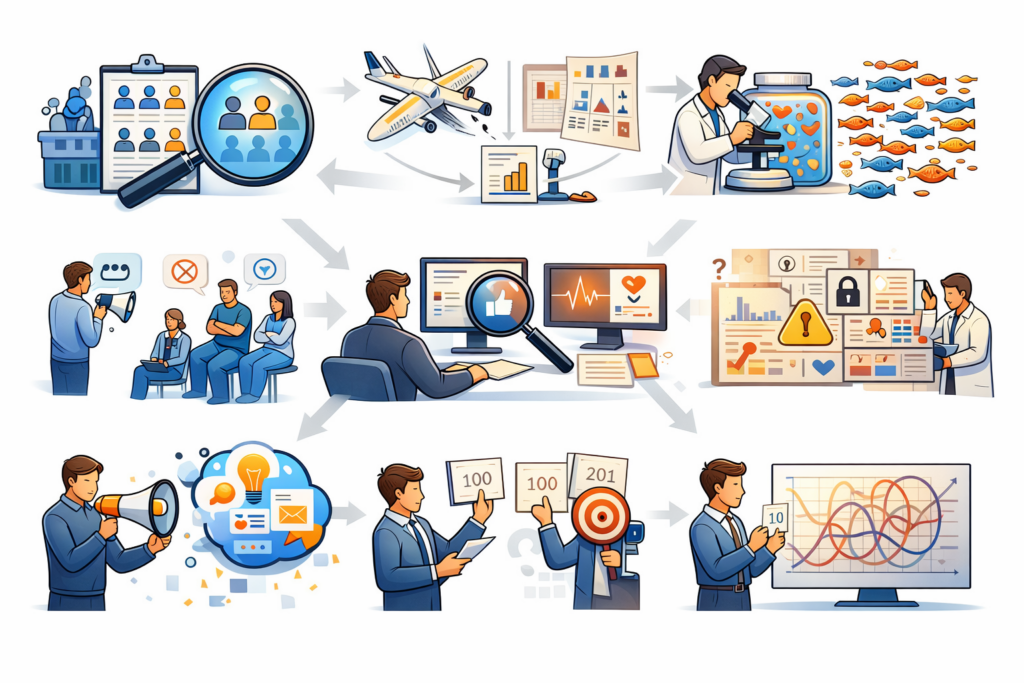
Courtesy Bias is a cognitive bias where respondents adjust their answers to avoid offending others, pleasing the questioner, or aligning with perceived expectations. In business and analytics contexts, this bias often distorts survey responses, feedback, or stakeholder input, creating a false sense of consensus or satisfaction.
In data analytics and BI, Courtesy Bias commonly appears in employee surveys, customer feedback, or focus group data. Respondents may overrate processes, products, or experiences to appear agreeable. For example, an internal survey on data quality might show inflated satisfaction because analysts hesitate to criticize leadership decisions or BI tools. Similarly, customer feedback collected via phone or face-to-face interviews often reflects politeness rather than actual sentiment.
The consequences are material. Decisions based on skewed data can lead to overconfidence in flawed processes, misallocation of resources, or underestimation of risks. BI teams may incorrectly assume that a product, feature, or operational process is performing well, resulting in missed opportunities for improvement.
A practical case occurred when a company relied on an employee satisfaction survey to guide workflow changes. Initial results indicated high satisfaction, but later anonymous feedback revealed widespread frustration with outdated data pipelines. Courtesy Bias had masked real issues, delaying critical operational upgrades.
Diagnosing this bias involves comparing anonymous versus non-anonymous feedback, cross-validating survey responses with objective metrics, and questioning whether social desirability may have influenced answers. Patterns of unusually high ratings or consistently positive feedback may signal Courtesy Bias.
Mitigation requires creating channels for anonymous and safe feedback, encouraging honesty, and combining qualitative and quantitative data sources. Framing questions neutrally and emphasizing that constructive criticism is valued reduces the bias’s impact.
The insight is clear. Politeness should not dictate decisions. Recognizing Courtesy Bias ensures that data reflects reality rather than social niceties, enabling informed, objective business choices.